Book Notes
Sum: Forty Tales from the Afterlives
A profound collection of imaginative vignettes exploring diverse possibilities of the afterlife, reminding us that life is fleeting and precious, and that we should make the most of every moment we have.
| Sum: Forty Tales from the Afterlives | 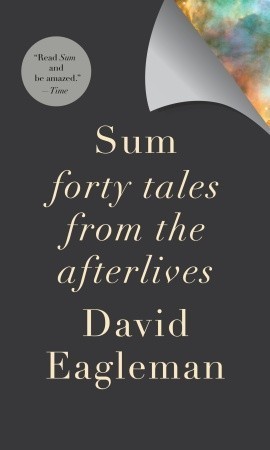 |
|---|---|
| Genre | Fiction, Short Stories, Philosophy |
| Author | David Eagleman |
| Month | Mar-26 |
| Medium | Hardcover |
Overview
Sum: Forty Tales from the Afterlives by David Eagleman is a uniquely profound collection of forty short vignettes that explore imaginative possibilities of what could come after death. Each tale presents a different conception of the afterlife—some whimsical, some poignant, some unsettling—but all serve as mirrors reflecting on the here and now.
Eagleman, a neuroscientist, brings scientific rigor and philosophical depth to these stories. Rather than providing definitive answers about what comes after, the book works as a thought experiment, inviting readers to contemplate life’s meaning by imagining its end. Each vignette is deliberately kept brief—often just a few pages—forcing the reader to extract deeper meaning from minimal narrative.
The book begins with “Sum,” where all aspects of your life are sorted and replayed in concentrated blocks: all 40 hours of driving, all instances of sadness, all moments of joy. It explores themes of consciousness, mortality, meaning, and the human condition. The brilliant insight of these stories lies not in what they tell us about death, but what they reveal about how we should live.
I began reading this book from the day of my hernia surgery, during a time when physical vulnerability naturally leads to contemplation of mortality. In those moments of discomfort and recovery, this book became an unexpectedly perfect companion—not providing false comfort, but rather offering perspective and acceptance about the finite nature of existence.
Learnings & Observations
-
Life is a Gift, Not a Guarantee:
Sumpowerfully reminds us that life is not permanent. Each story, in its own way, underscores the transience of existence. This realization, rather than being depressing, becomes liberating—when we truly accept that our time is limited, we can more intentionally choose how to spend it. -
Make the Most of Every Moment: The central message across these vignettes is clear: no one truly knows what happens after death. In the face of this uncertainty, the only rational choice is to live fully, authentically, and meaningfully in the present. The afterlife remains unknown, but this life is certain—make it count.
-
Mortality as a Teacher: Reading about various conceptions of the afterlife during a time of physical vulnerability created a profound meditation on mortality. Rather than inducing fear, contemplating death during surgery became a clarifying experience—it helped me prioritize what truly matters and shed what doesn’t.
-
Perspective on Suffering and Purpose: Many of Eagleman’s stories reframe suffering and seemingly mundane moments. Some tales suggest that the “worst” moments are as valuable as the “best” ones. This reorientation helps readers appreciate the totality of life—not just the peak experiences—as inherently meaningful.
-
The Paradox of Understanding:
Sumgently suggests that perhaps the afterlife is beyond our capacity to comprehend, and that’s okay. This acceptance paradoxically frees us from needing certainty and allows us to focus on living well rather than speculating endlessly about what comes next. -
Life as a Conversation: The book is written almost as a conversation between author and reader about the fundamental questions of existence. It doesn’t preach; it poses scenarios and lets readers draw their own conclusions about meaning, purpose, and how to live.
Sum: Forty Tales from the Afterlivesis a remarkable reminder that while we cannot know what awaits us beyond this life, we can know with certainty that this life—right now, this moment, this breath—is real and precious. It is a gift. Eagleman’s vignettes serve as gentle nudges to live intentionally, to cherish relationships, and to find meaning in both the extraordinary and the mundane. In the face of life’s impermanence, the only logical response is to make the most of it, because truly, no one knows what happens after. Make this life extraordinary.